Choosing the Right Insulation
Understanding Insulation Options: Batt, Rigid, and Spray Foam
Published by Copp's Buildall | London's Local Hardware & Building Supply Specialists
________________________________________
If there is one home upgrade that consistently pays for itself, it's insulation. Whether you are building new, finishing a basement, or tackling a long-overdue attic project, the right insulation can dramatically reduce your energy bills, improve year-round comfort, and add real value to your home. In fact, attic insulation is routinely cited as one of the highest-return renovations a homeowner can make — often returning close to 100% of the investment at resale, even before you even factor in the monthly savings on heating and cooling.
The challenge for most homeowners isn't deciding whether to insulate — it's figuring out which type to use and where. Walk into the insulation aisle and you will find batts, rigid boards, spray cans, and everything in between. The good news is that each product has a job it does best, and once you understand the basics, the right choice usually becomes pretty clear.
Here's a plain-language breakdown of the three main insulation types: batt, rigid foam, and spray foam.
________________________________________
Batt Insulation: The Reliable Workhorse
Best for: Walls, attics, and floors between framing; new construction and open-cavity renovations
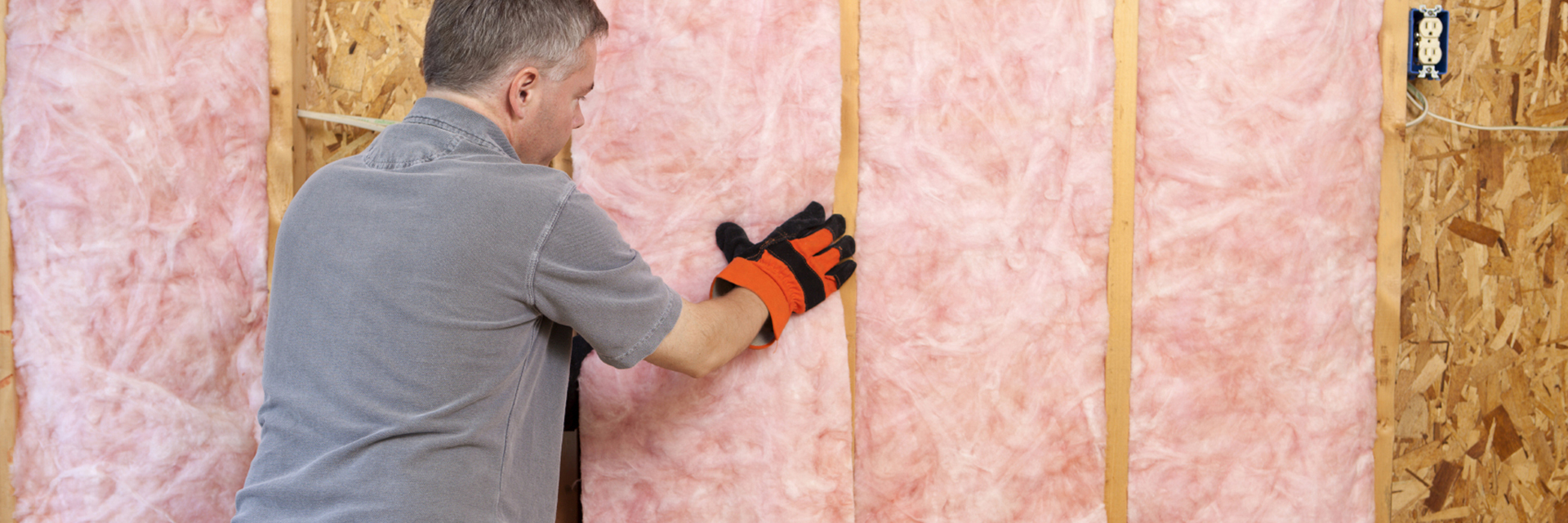
Batt insulation — most commonly made from fibreglass or mineral wool (rock wool) — is what most people picture when they think of insulation. It comes in batts that are sized to fit snugly between standard wall studs and floor joists, which makes it one of the most DIY-friendly options available.
Fibreglass batts are affordable, widely available, and easy to cut with a utility knife. They're a solid choice for exterior walls and attics, and they're non-combustible. The key to getting good performance out of any batt insulation is proper installation — gaps, excessive compression, and missing sections all reduce its effectiveness significantly. If you are doing it yourself, take your time and fit it carefully.
Mineral wool (rock wool) batts cost a bit more but offer some meaningful advantages: better soundproofing, higher fire resistance, and they're naturally moisture-resistant. Many contractors and experienced DIYers prefer mineral wool for basement walls, garage ceilings, and anywhere noise reduction is a priority. It's also easier to cut cleanly and holds its shape better than fibreglass.
R-values measure an insulation’s resistance to heat transmission. Batts typically range from R-11 to R-40, depending on thickness, making them an ideal choice for achieving code-compliant wall assemblies.
One thing to keep in mind: batts work best when the cavity is unobstructed. Awkward framing, lots of electrical runs, or areas that are difficult to access tend to result in gaps — and gaps are where your heat goes.
________________________________________
Rigid Foam Insulation: The High-Performance Layer
Best for: Foundation walls, under concrete slabs, exterior sheathing, and anywhere continuous insulation is needed
Rigid foam boards are exactly what they sound like — flat, dense panels of foam that can be cut to size and installed in a variety of applications. Unlike batts, rigid foam doesn't need a framing cavity to do its job. This makes it incredibly versatile, especially for areas where batt insulation simply won't work.
There are three main types:
EPS (Expanded Polystyrene) — the familiar "beadboard" style. It's cost-effective, moisture-resistant, and a good general-purpose choice for below-grade applications like foundation walls and under slabs. However, it has the lowest R-value and is the messiest to use.
XPS (Extruded Polystyrene) — the blue, pink, or grey boards you'll recognize from any lumber yard, XPS offers slightly higher R-values per inch than EPS and excellent moisture resistance, making it a popular choice for basement walls and exterior foam sheathing on new builds.
Polyisocyanurate (Polyiso) — the highest R-value per inch of the three (typically R-6 to R-6.5 per inch), often used on roofs and in commercial construction. It can be slightly more sensitive to cold temperatures, so it's less commonly used in below-grade applications.
Rigid foam also plays an important role in eliminating thermal bridging — the heat loss that happens through wood studs and other framing members. Layering rigid foam over the exterior of a wall assembly dramatically improves the overall thermal performance, and it's a technique that's becoming increasingly common in high-performance home builds.
For London homeowners, rigid foam on basement walls is one of the most practical upgrades you can make. Our winters are cold, and an uninsulated or under-insulated foundation is one of the biggest sources of heat loss in an older home.
________________________________________
Spray Foam Insulation: The Air-Sealing Champion
Best for: Air sealing, rim joists, irregular spaces, and achieving maximum performance where it matters most
Spray foam is in a category of its own, because it does two things at once that no other insulation product does quite as well: it insulates and it air-seals. When the foam expands and cures, it fills every crack, gap, and irregular surface — creating a near-perfect thermal and air barrier in a single application.
Be aware that spray foam insulation products vary by how much they expand during the curing process. Choose products marked as “low-expansion” for insulating around windows and doors; and higher expansion products for larger cavities.
Where spray foam really shines:
• Rim joists — the area where your floor framing meets the foundation wall — are notoriously leaky and often overlooked. A few inches of closed-cell spray foam here will make a noticeable difference.
• Attic hatches and other irregular penetrations where batts simply can't seal effectively.
• Older homes with lots of gaps in the building structure, where air sealing is just as important as insulation value.
A note on installation: While small DIY spray foam kits are available for targeted air sealing jobs (door frames, pipe penetrations, and the like), larger applications are generally best left to a professional installer. Obtaining a desired R-value demands great attention when spraying, and coverage in consumer-sized containers is limited.
________________________________________
Choosing the Right Insulation: A Quick Guide
Application Recommended Option
Exterior walls (new construction) Fibreglass or mineral wool batts + exterior rigid foam
Basement walls Rigid XPS or EPS board, or closed-cell spray foam
Attic Blown-in or fibreglass batts
Rim joists Closed-cell spray foam
Crawlspace Closed-cell spray foam or rigid foam
Interior walls (soundproofing) Mineral wool batts
Irregular gaps and penetrations Open or closed-cell spray foam can
________________________________________
Don't Forget About Air Sealing
No matter which insulation product you choose, air sealing is every bit as important as the R-value. A well-insulated wall with air leaks still loses a significant amount of heat — and the reverse is also true: good air sealing with modest insulation outperforms great insulation with air gaps. The two work together. Products like acoustic sealant, vapour barrier, vapour barrier tape, and spray foam (cans) are all part of a complete insulation system.
________________________________________
We're Here to Help You Get It Right
Choosing insulation isn't complicated once you know what each product does — but getting the details right for your specific project can make the difference between a good job and a great one. At Copp's Buildall, we carry a full range of insulation products across all four of our London locations, and our team has seen just about every scenario a London home can throw at you.
If you're not sure where to start, stop in and talk to us. We'll ask a few questions about your project and point you in the right direction — whether you're doing it yourself or working with a contractor. And if you need installation, ask us about our installed insulation service.
Come see us at any of our four London locations, or visit coppsbuildall.com to explore products and book a consultation.
Superior Service Since 1877.
________________________________________
Copp's Buildall — London's Local Hardware & Building Supply Specialists | (519) 679-9090 | coppsbuildall.com